

Our Work
Our lab investigates the ecology and evolution of moths and other aerial arthropods across spatial, temporal, and phylogenetic scales.
We integrate macroecological field surveys from the Eastern Himalayas and Central India with advanced phylogenetic reconstructions, deep-learning–based image processing, and weather radar analytics to uncover how climate, morphology, and evolutionary history shape insect diversity and movement.
By combining genomics, morphometrics, and atmospheric sensing, we aim to build a holistic understanding of how insect communities adapt and respond to environmental change.
We are always looking for motivated interns eager to contribute to this interdisciplinary research at the interface of ecology, evolution, and technology! Find out more here.


Macroecology
We study the macroecology of moths to understand how diversity, distribution, and functional traits vary across large climatic and elevational gradients. We combine field sampling, phylogenetics, and morphometrics with environmental and remote-sensing data to uncover the ecological and evolutionary processes shaping moth assemblages. Through this work, we aim to reveal how tropical insect communities respond to changing climates and landscapes across regions such as the Eastern Himalayas and Central India.
Write to us to learn more, or see our articles
Phylogenetics
Our lab uses advanced phylogenetic methods to reconstruct evolutionary relationships among tropical moths and to quantify how their climatic niches evolve over time. We combine multi-locus genomic sequencing (nuclear and mitochondrial markers) with robust computational frameworks to generate time-calibrated phylogenies for hundreds of species. Together, these approaches allow us to integrate evolutionary history with morphological and climatic data, revealing how moth lineages adapt to temperature and habitat gradients.
Write to us to learn more, or see our articles

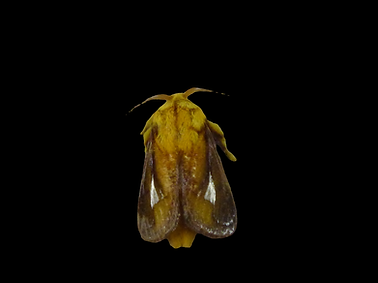
Advanced Image Processing & Deep learning
We use advanced image segmentation and feature extraction techniques to quantify moth morphology at scale. We apply deep learning architectures with Feature Pyramid Networks to extract detailed geometrical, colorimetric, and textural features from high-resolution field images. Automated segmentation models like Meta AI’s Segment Anything are optimized to crop individual moths from light-trap photographs, enabling precise trait measurement across thousands of specimens. These workflows create high-dimensional feature vectors that capture shape, size, and spectral variation—providing a powerful bridge between morphology, phylogeny, and climatic adaptation.
Write to us to learn more, or see our articles
Radar Aeroecology
Our lab applies advanced radar entomology to study large-scale aerial movements of insects across landscapes. We analyze volumetric weather radar (WSR) data from multiple stations to quantify diurnal and nocturnal flight activity, altitude-specific abundance, and migration dynamics of aerial arthropods across the UK. This integrative approach bridges atmospheric science and ecology, enabling long-term, cost-effective monitoring of insect populations at continental scales.
Write to us to learn more, or see our articles

Read More about our Work


-
Mungee, M., Wilkes, M., Bell, V., Kunin, W.E., Hassall, C. and Brown, L.E., 2025. Rising, falling, stalling: Complex biodiversity trajectories in UK rivers. bioRxiv, pp.2025-11.
-
Mungee, M., Lukach, M., Shortall, C., Bell, J.R., Duncan, E.J., Addison, F., Brown, L.E., Kunin, W.E., Hassall, C. & Neely, R.R. III (2025). Spatio-temporal Variation in Aerial Arthropod Abundance Revealed by Weather Radars. Global Change Biology (In Press). Available at: www.eprints.whiterose.ac.uk/id/eprint/229629
-
Mungee, M., Pandit, R. and Athreya, R., 2025. Strong seasonal and elevational dynamics in community assembly mechanisms of tropical montane birds in the Eastern Himalayas. Tropical Ecology, 66(4), pp.559-572.
-
Wilkes, M.A., Mungee, M., Naura, M., Bell, V.A. & Brown, L.E. (2024). Predicting nature recovery for river restoration planning and ecological assessment: A case study from England, 1991–2042. River Research and Applications. DOI: 10.1002/rra.4282. Available at: www.doi.org/10.1002/rra.4282
-
Mungee, M., Pandit, R. & Athreya, R. (2023). Tropical montane gradients elucidate the contributions of functional traits to competitive and environmental fitness. bioRxiv, 2023-09. DOI: 10.1101/2023.09.03.556015. Available at: www.doi.org/10.1101/2023.09.03.556015
-
Maitra, A., Pandit, R., Mungee, M. & Athreya, R. (2023). Testing a theoretical framework for the environment-species abundance paradigm: A new approach to the Abundant Centre Hypothesis. bioRxiv. DOI: 10.1101/2022.01.03.474819. Available at: www.doi.org/10.1101/2022.01.03.474819
-
Mungee, M., Pandit, R. & Athreya, R. (2021). Taxonomic scale dependency of Bergmann’s patterns: A cross-scale comparison of hawkmoths and birds along a tropical elevational gradient. Journal of Tropical Ecology, 37(6), 302–312. DOI: 10.1017/S0266467421000432. Available at: www.doi.org/10.1017/S0266467421000432
-
Mungee, M. & Athreya, R. (2021). Intraspecific trait variability and community assembly in hawkmoths (Lepidoptera: Sphingidae) across an elevational gradient in the Eastern Himalayas, India. Ecology and Evolution, 11(6), 2471–2487. DOI: 10.1002/ece3.7054. Available at: www.doi.org/10.1002/ece3.7054
-
Mungee, M. & Athreya, R. (2020). Rapid photogrammetry of morphological traits of free-ranging moths. Ecological Entomology, 45(5), 911–923. DOI: 10.1111/een.12907. Available at: www.doi.org/10.1111/een.12907
-
Mungee, M. & Athreya, R. (2019). Functional randomness despite high taxonomic turnover across an elevational gradient in a global biodiversity hotspot: A case study of hawkmoths and birds. bioRxiv. DOI: 10.1101/867770. Available at: www.biorxiv.org/content/10.1101/867770v1
-
Sathyakumar, S., Mungee, M. & Pal, R. (2020). Biogeography of the Mountain Ranges of South Asia. In M.I. Goldstein & D.A. DellaSala (Eds.), Encyclopedia of the World’s Biomes (pp. 543–554). Elsevier. DOI: 10.1016/B978-0-12-409548-9.12462-5. Available at: www.doi.org/10.1016/B978-0-12-409548-9.12462-5
-
Sathyakumar, S. & Mungee, M. (2022). Human-wildlife conflict in the trans and northwest Himalaya: A review. In Proceedings of the Workshop on Forestry Research, Sustainable Forest Management and Livelihood. Available at: www.researchgate.net/profile/Mansi-Mungee